Product strategy • Mobile app • User research
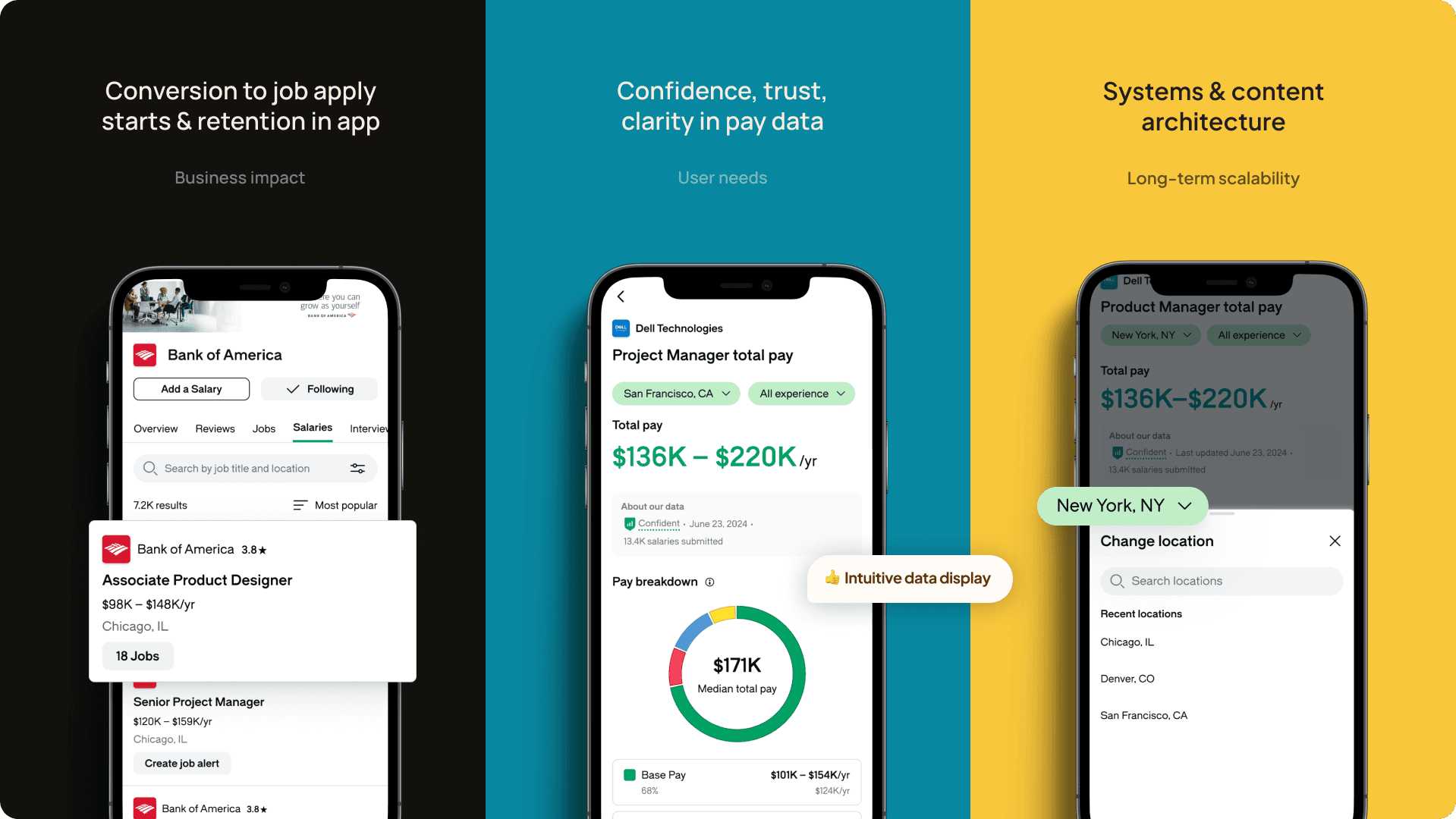
Improving app retention & driving job conversions with Glassdoor salaries

Improving app retention & driving job conversions with Glassdoor salaries

The image featured at the bottom of the about us page

ROLE

Lead product designer

PROJECT LENGTH

2 months

TEAM

1 Designer

1 UX Researcher

1 Product Manager

3 mobile engineers (iOS and Android)

MY IMPACT

Facilitated 3-day design sprint with product and design stakeholders to ideate

THE PROBLEM

With 60%+ of users doing pay research on the Glassdoor app, optimizing the mobile experience was essential.

With 60%+ of users doing pay research on the Glassdoor app, optimizing the mobile experience was essential.

The image featured at the bottom of the about us page

PROJECT GOAL

How might we reduce friction in the job apply process, through transparent, trustworthy pay discovery?

How might we reduce friction in the job apply process, through transparent, trustworthy pay discovery?

The image featured at the bottom of the about us page

SOLUTION

I redesigned the 'pay & benefits' experience on native app, improving usability & enabling a full migration off of legacy web frames.

PAY DISCOVERY

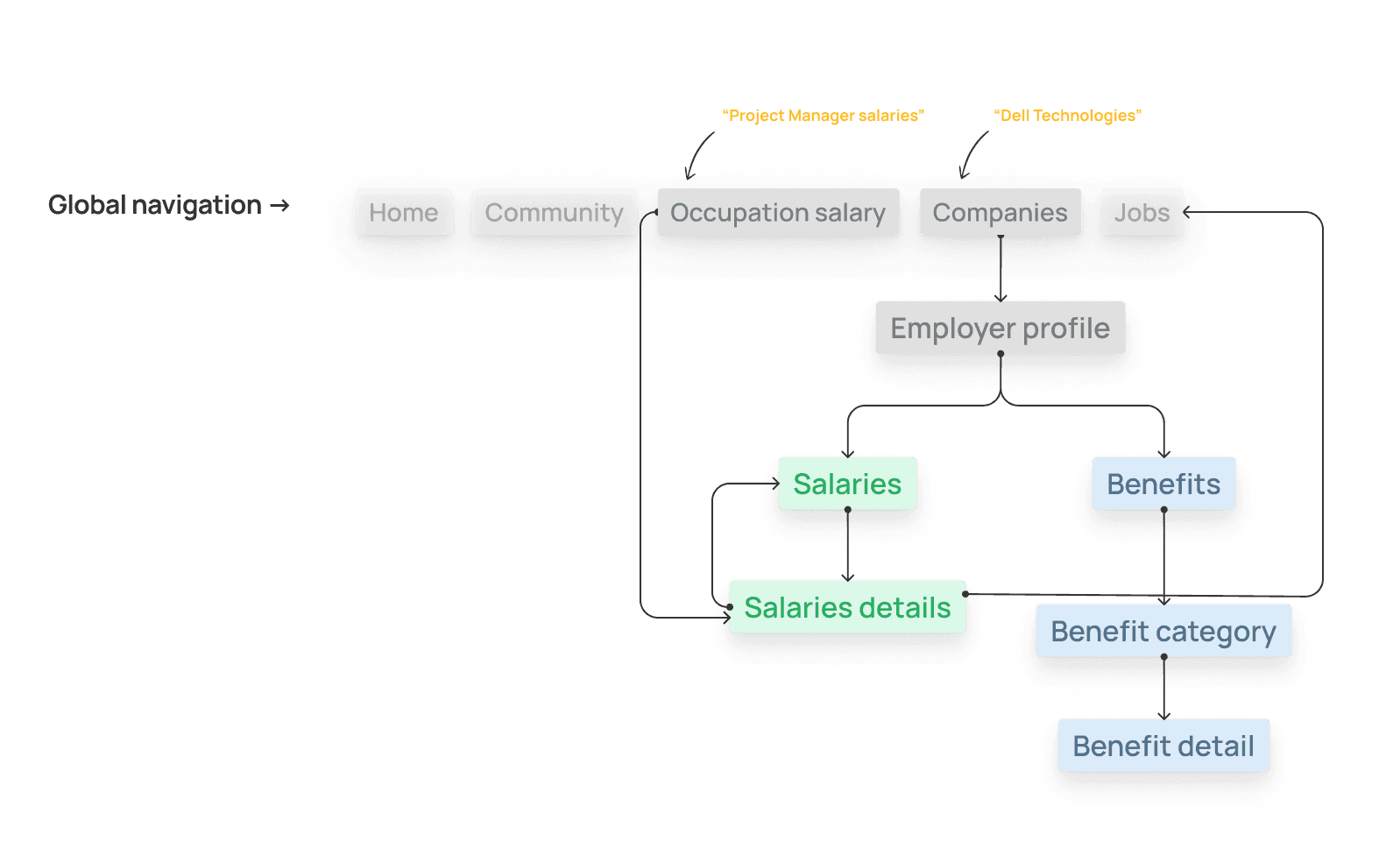
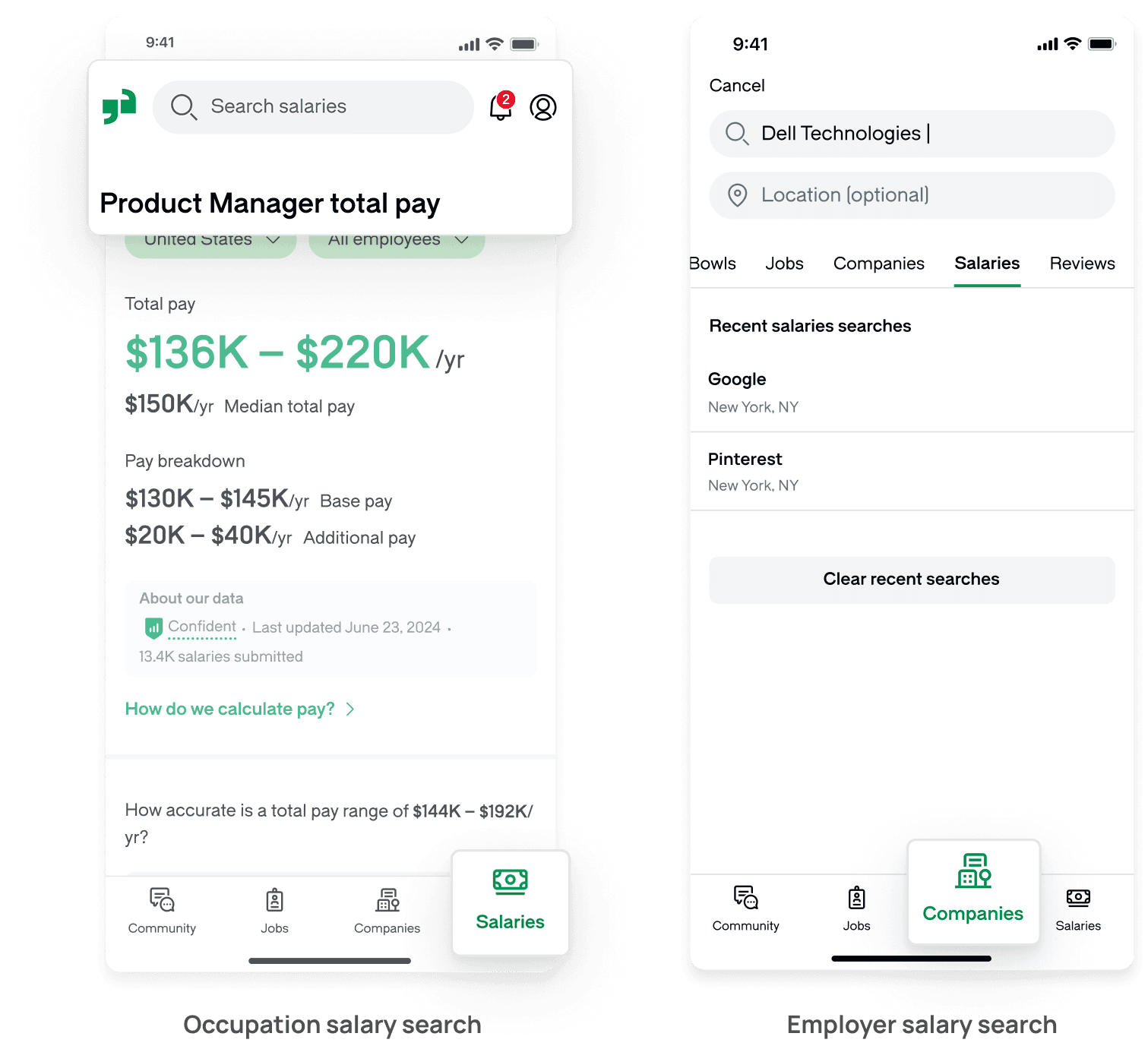
Jobseekers discover pay through two lenses — occupation and employer — so I designed a scalable IA to support both intents.

An unmoderated tree test study informed that structuring navigation this way allows for more entry points into pay data and gives Glassdoor the opportunity to personalize the landing page after onboarding.
The image featured at the bottom of the about us page

Now, users can explore salaries through both mental models

Now, users can explore salaries through both mental models

IMPROVING USABILITY

Users see total compensation as salary + benefits, which shaped a two-part design approach
Salary pages

Salary pages

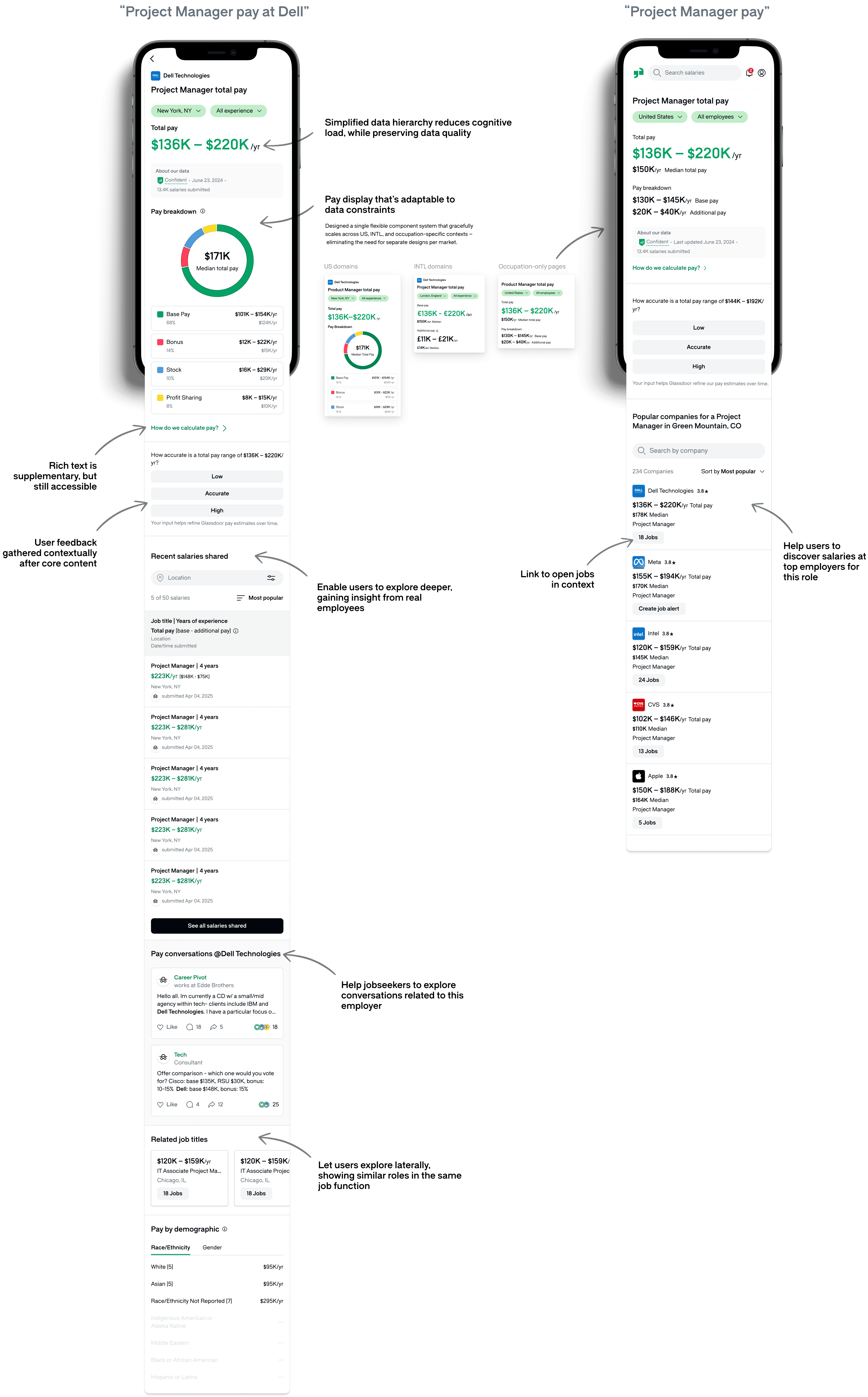
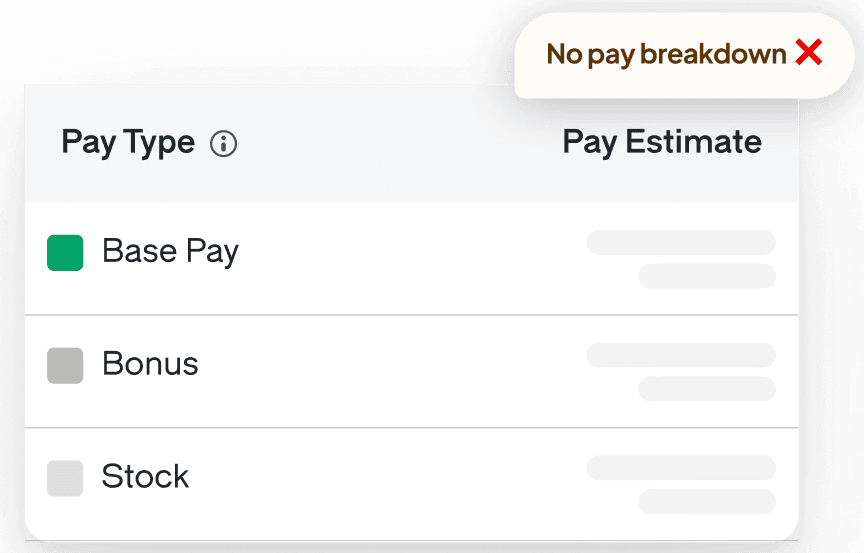
Data constraints and user behavior drove four core design principles for salary displays

Data constraints and user behavior drove four core design principles for salary displays

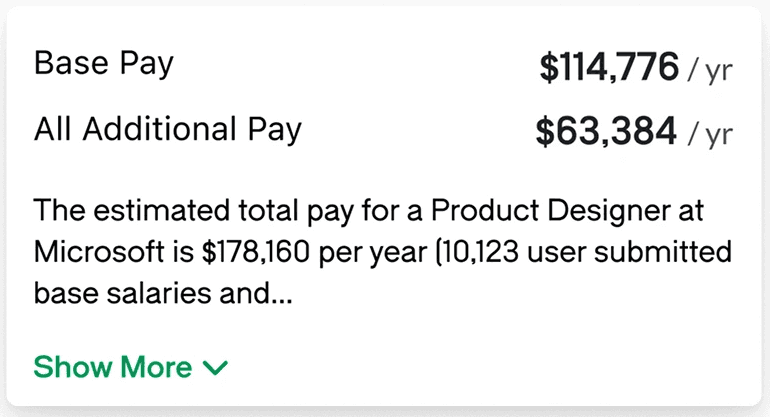
Flexible design to handle sparse pay data across international and occupation-scoped experiences

Flexible design to handle sparse pay data across international and occupation-scoped experiences

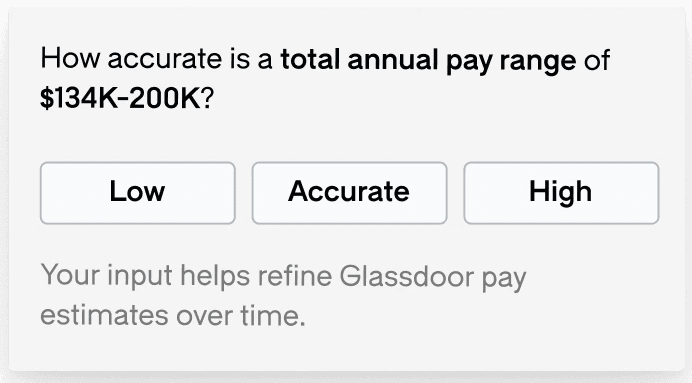
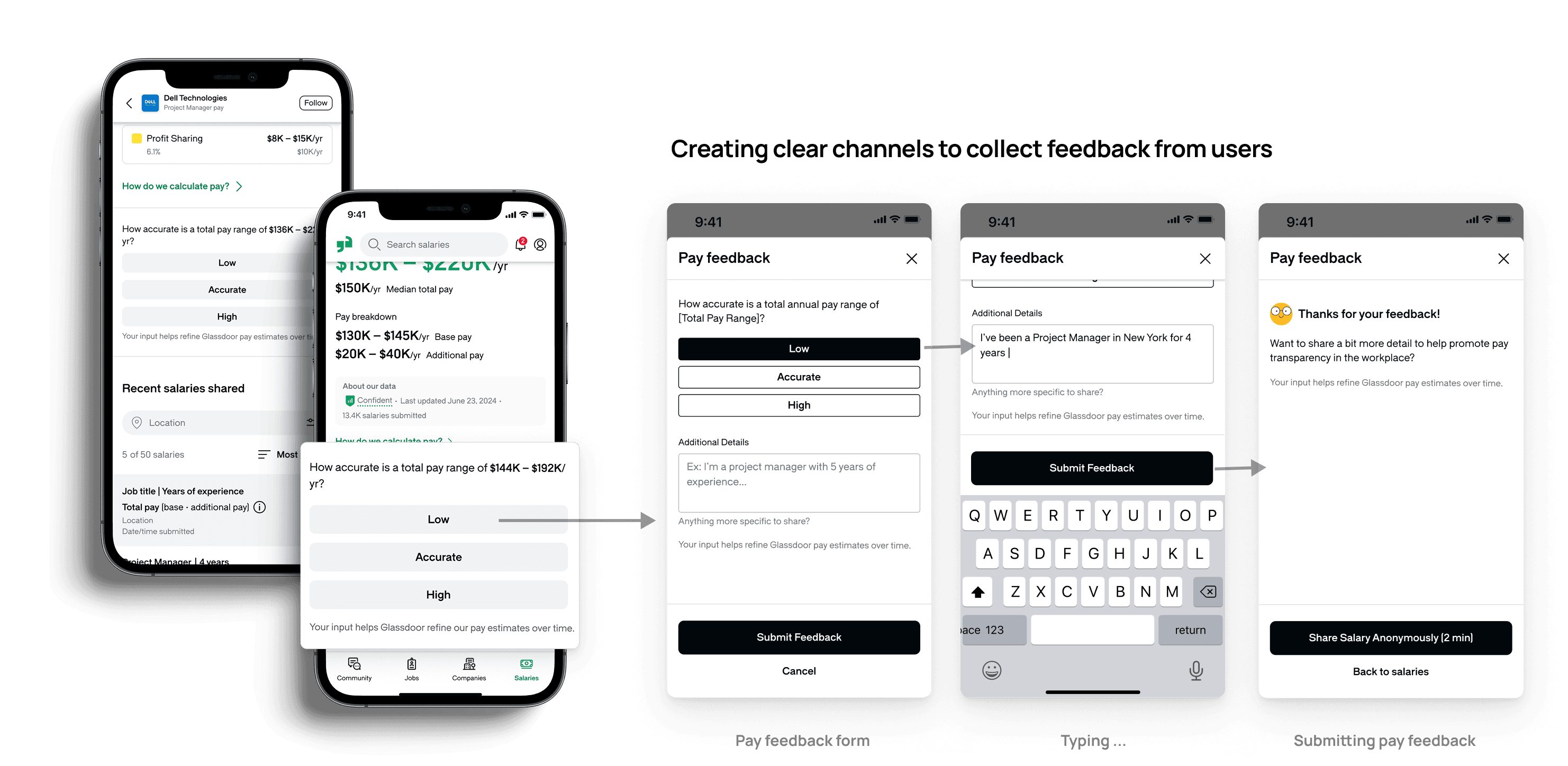
Prioritize showing pay content to users before collecting feedback to inform our data models

Prioritize showing pay content to users before collecting feedback to inform our data models

Balance cognitive overload of data-heavy content

Balance cognitive overload of data-heavy content

Data displays must meet accessibility requirements

Data displays must meet accessibility requirements

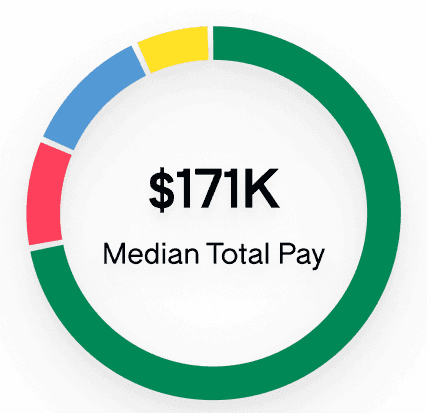
I evaluated 4 design directions against key criteria: data density, trust, and scalability

I evaluated 4 design directions against key criteria: data density, trust, and scalability

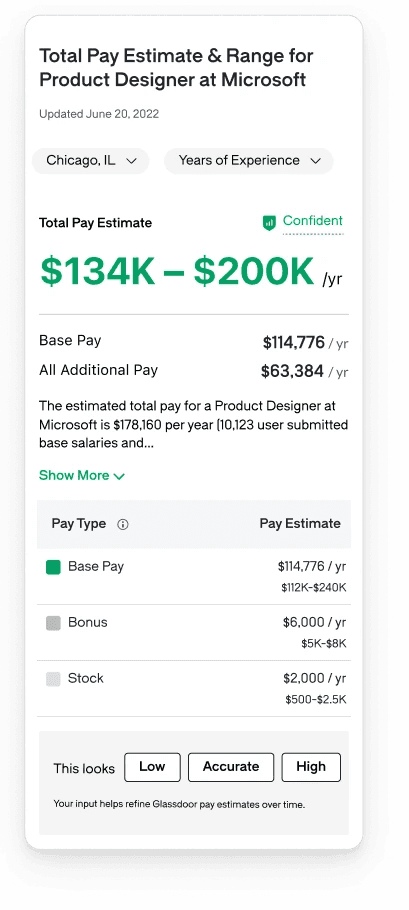
1

Emphasis on text

  • Data was overly dense, making core salary data difficult to scan

  • The display was over-optimized for SEO
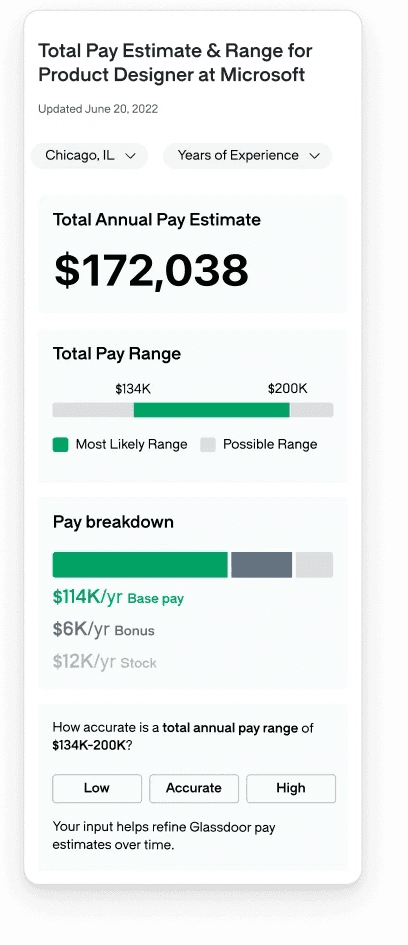
2

Heavy data visualization

  • Bento grid brought structure, but lacked hierarchy overall

  • Accessibility issues with the data visualization
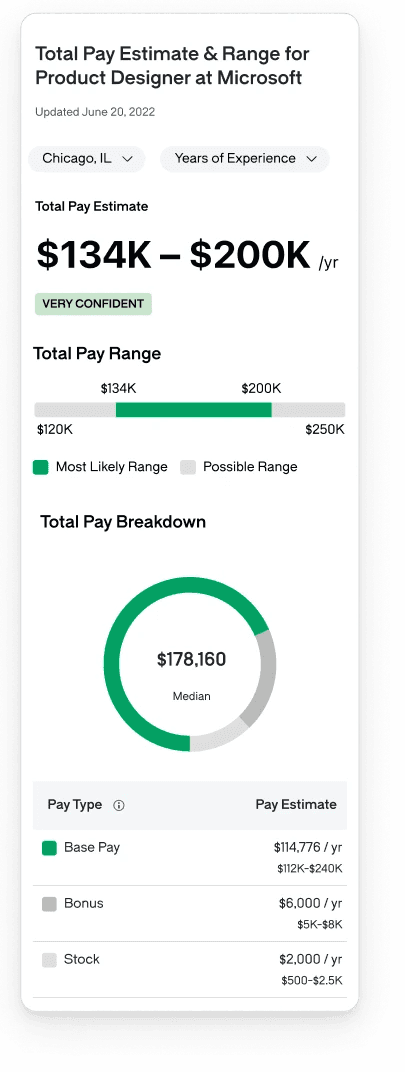
3

Hybrid

  • More simple and clear page hierarchy

  • But data visualization showed duplicative and irrelevant data
The final design scaled globally, supporting both deep pay exploration and lateral navigation across pages

The final design scaled globally, supporting both deep pay exploration and lateral navigation across pages

The final design scaled globally, supporting both deep pay exploration and lateral navigation across pages

The image featured at the bottom of the about us page

Benefits pages

Benefits pages

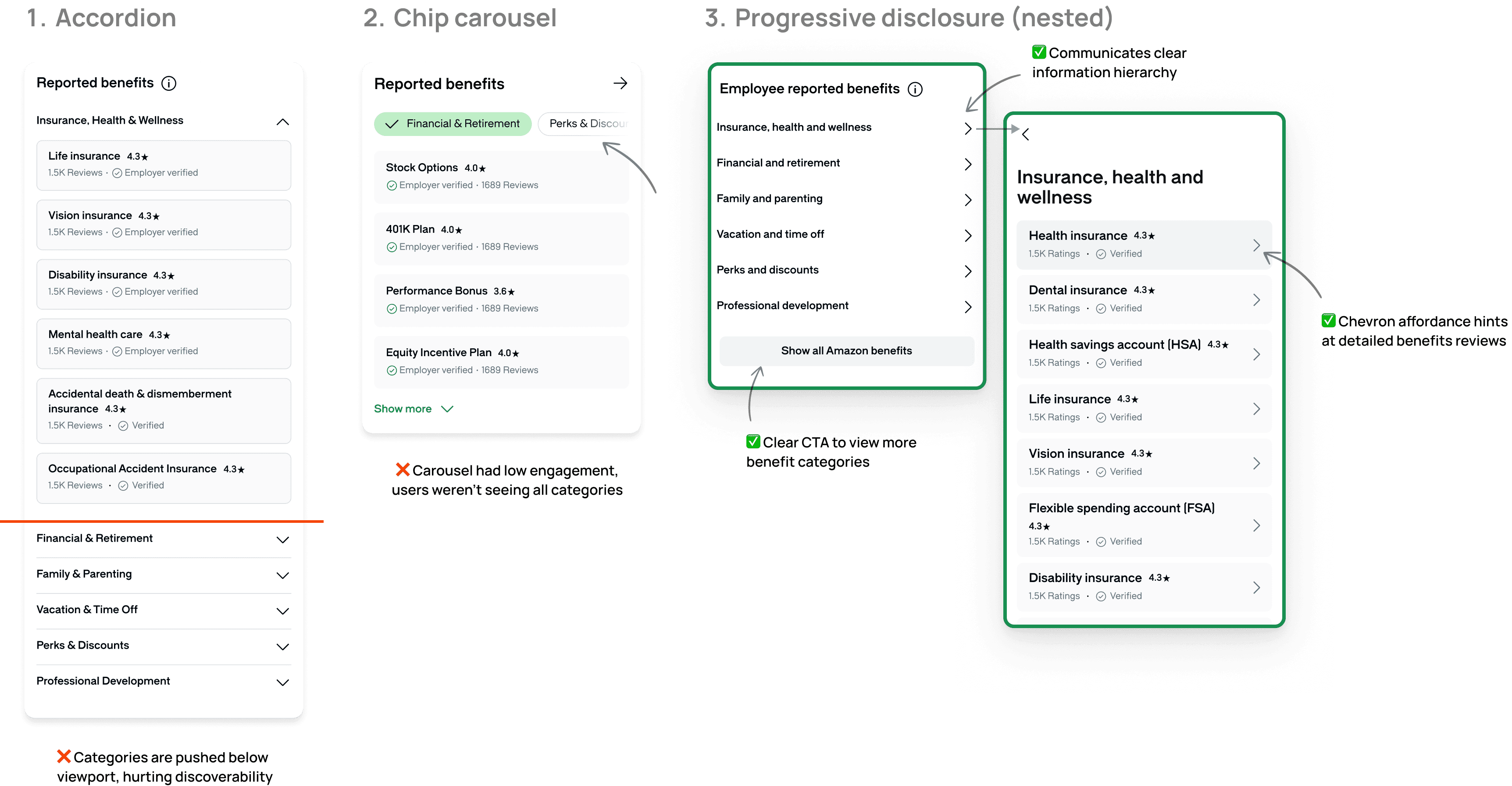
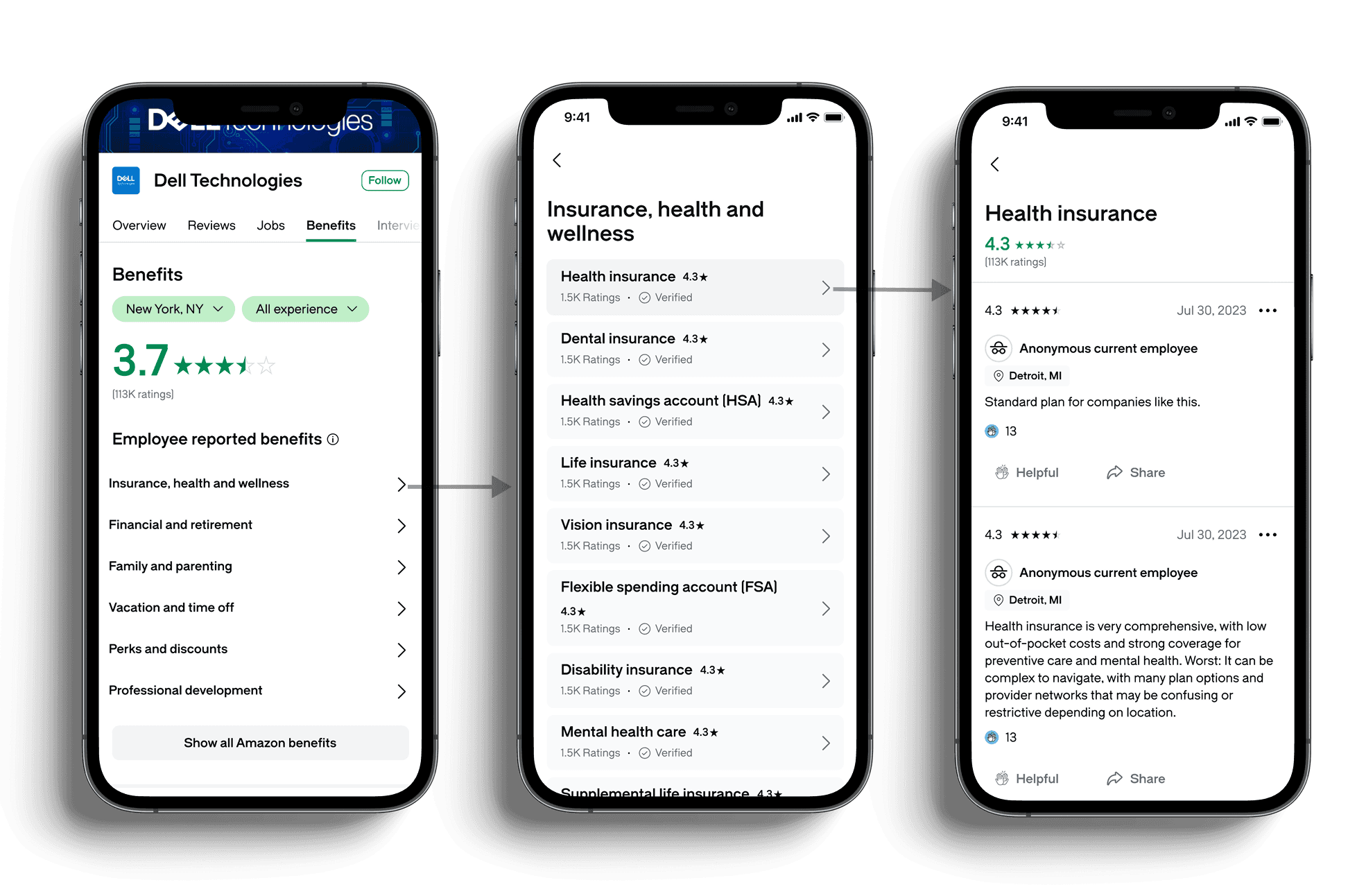
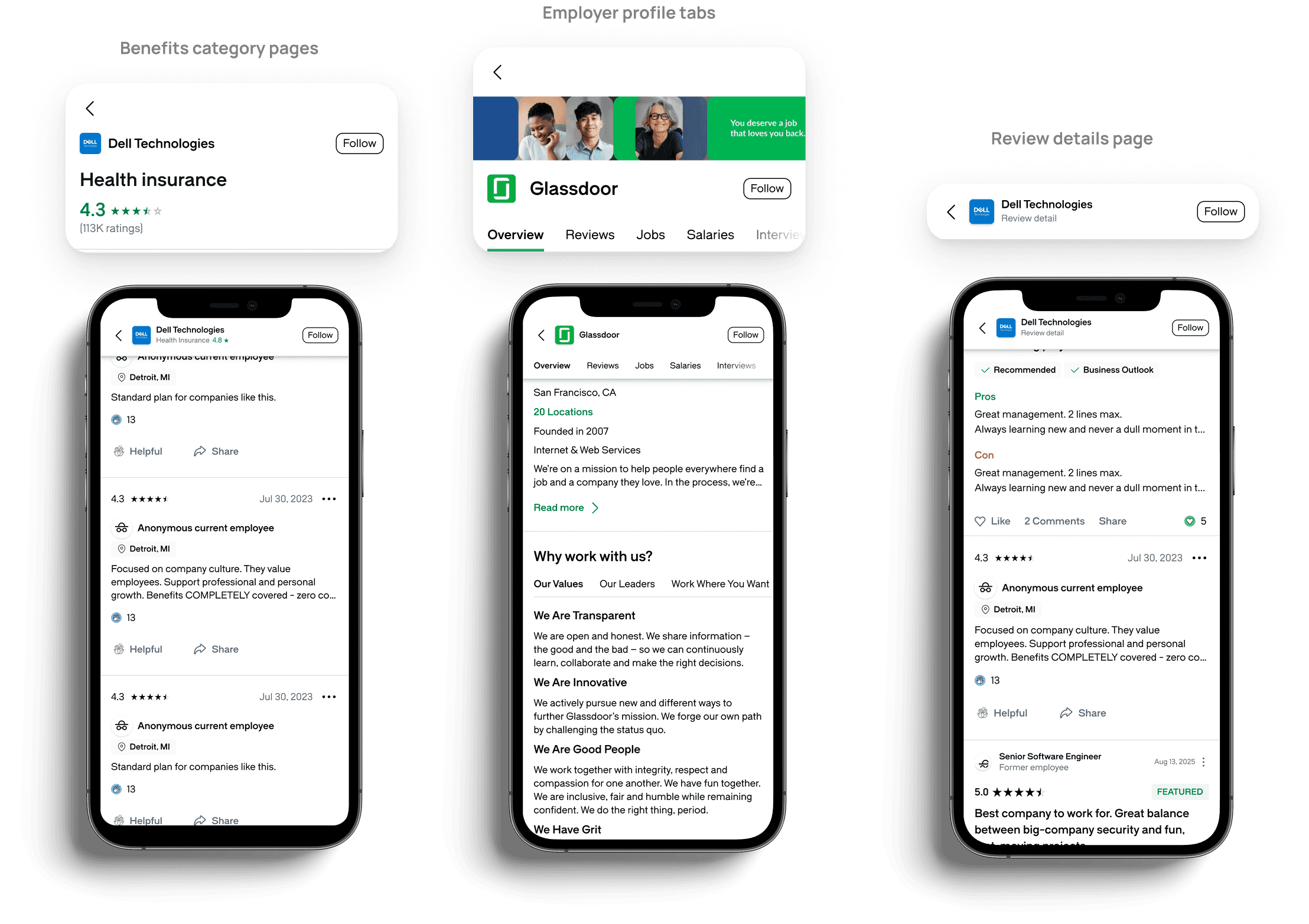
The design challenge on benefits pages was to clearly communicate the hierarchy between employer benefit categories & types

The design challenge on benefits pages was to clearly communicate the hierarchy between employer benefit categories & types

The image featured at the bottom of the about us page

Progressive disclosure won — it communicates hierarchy clearly, scales to any number of categories, and preserves screen real estate

Progressive disclosure won — it communicates hierarchy clearly, scales to any number of categories, and preserves screen real estate

Progressive disclosure won — it communicates hierarchy clearly, scales to any number of categories, and preserves screen real estate

BUSINESS IMPACT

Glassdoor serves both jobseekers and employers. How might we continue strengthening our value proposition to employers?

Job applies in-app
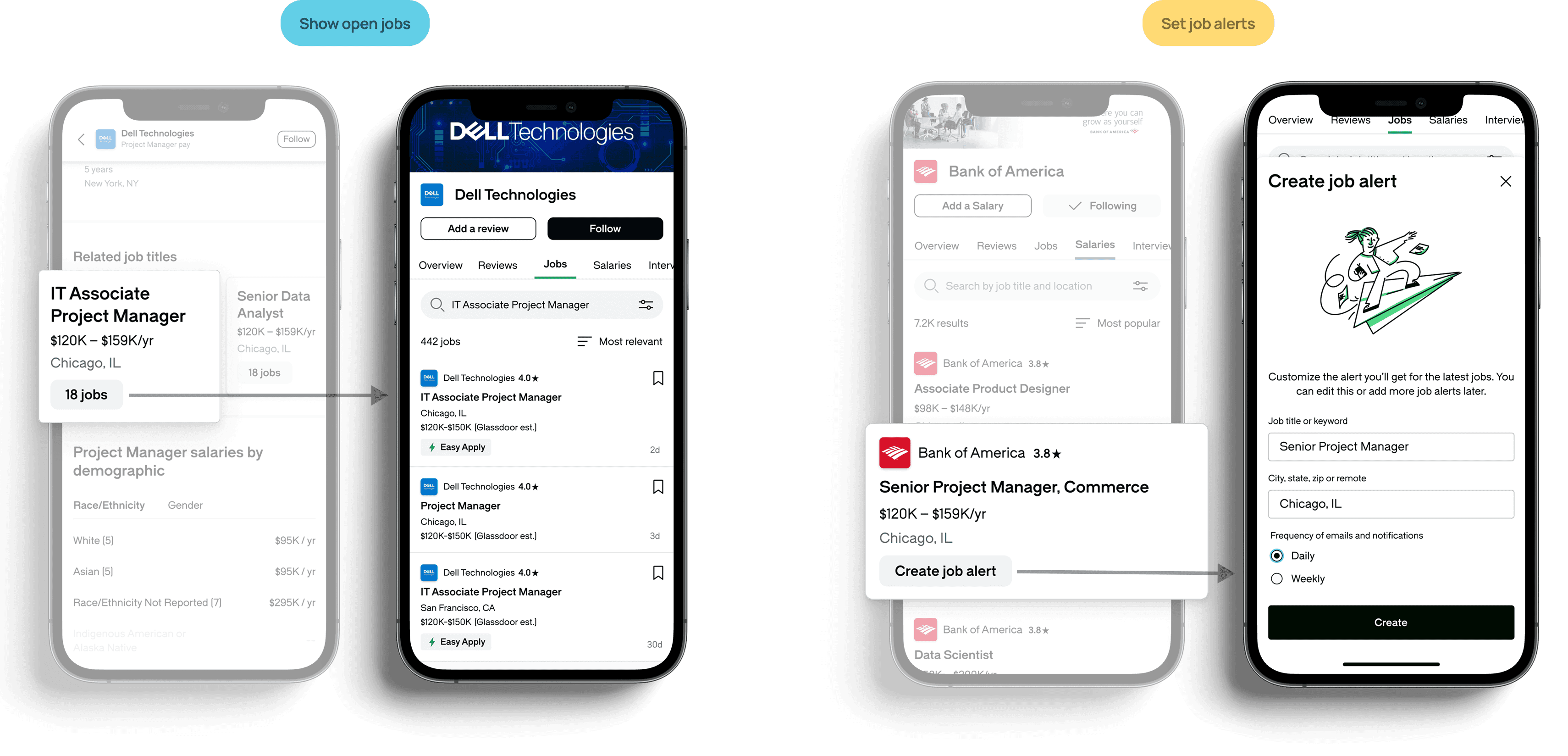
After pay research, users were ready to apply, but had no direct path to jobs.

After pay research, users were ready to apply, but had no direct path to jobs.

The image featured at the bottom of the about us page

Showing open jobs in context and informing users about new roles, allowed them to capitalize on high-intent moments

Showing open jobs in context and informing users about new roles, allowed them to capitalize on high-intent moments

Showing open jobs in context and informing users about new roles, allowed them to capitalize on high-intent moments

This directly increases revenue for Glassdoor, since apply starts are the primary way Glassdoor monetizes jobs that are featured on our platform.

This directly increases revenue for Glassdoor, since apply starts are the primary way Glassdoor monetizes jobs that are featured on our platform.

Enhance employer branding

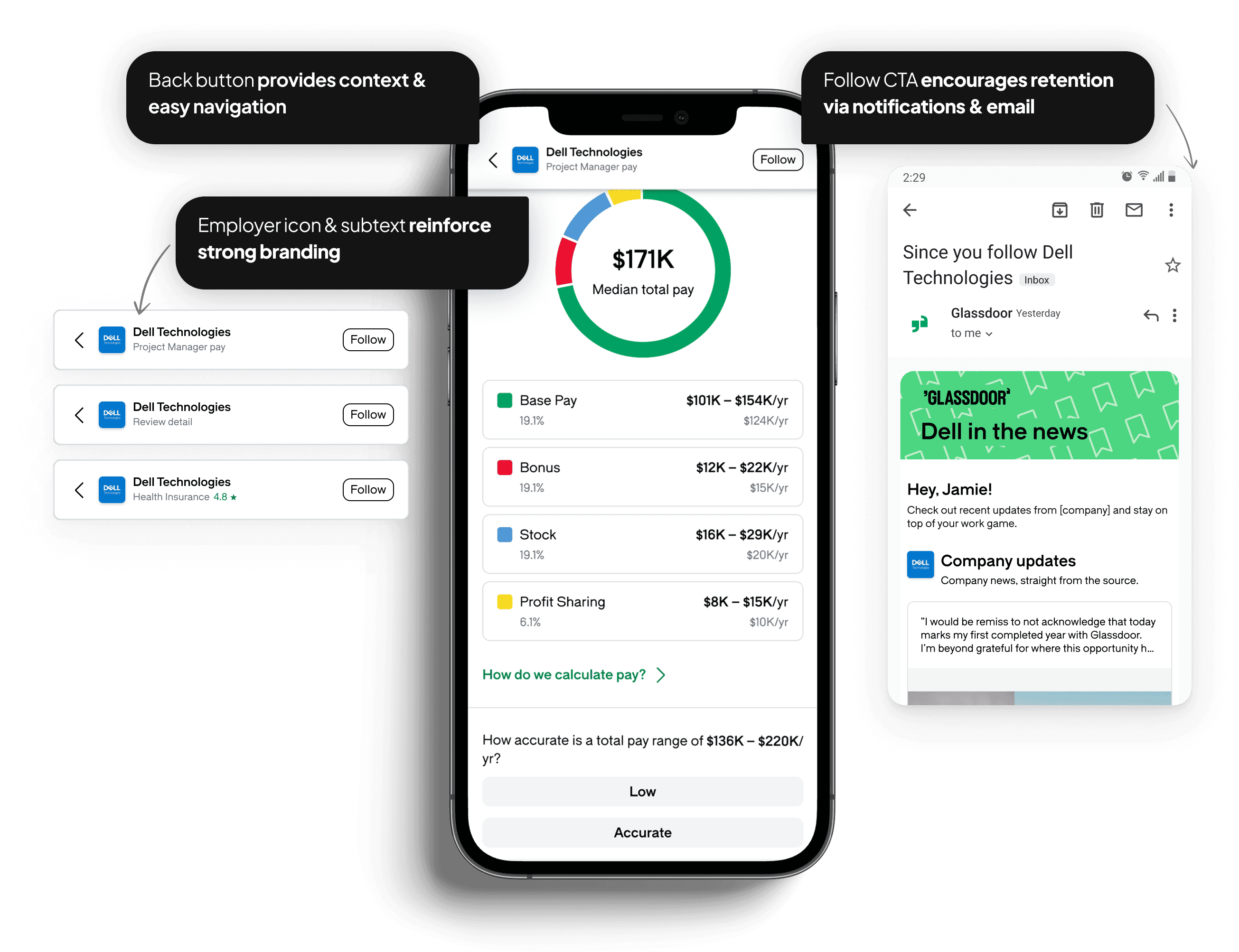
Employer presence also wasn't strong – users were losing context of whether they were on an employer-scoped page.

Employer presence also wasn't strong – users were losing context of whether they were on an employer-scoped page.

The image featured at the bottom of the about us page

Introducing a sticky header on scroll, created clarity for jobseekers and visibility for employers who pay for branding.

Introducing a sticky header on scroll, created clarity for jobseekers and visibility for employers who pay for branding.

Introducing a sticky header on scroll, created clarity for jobseekers and visibility for employers who pay for branding.

The image featured at the bottom of the about us page

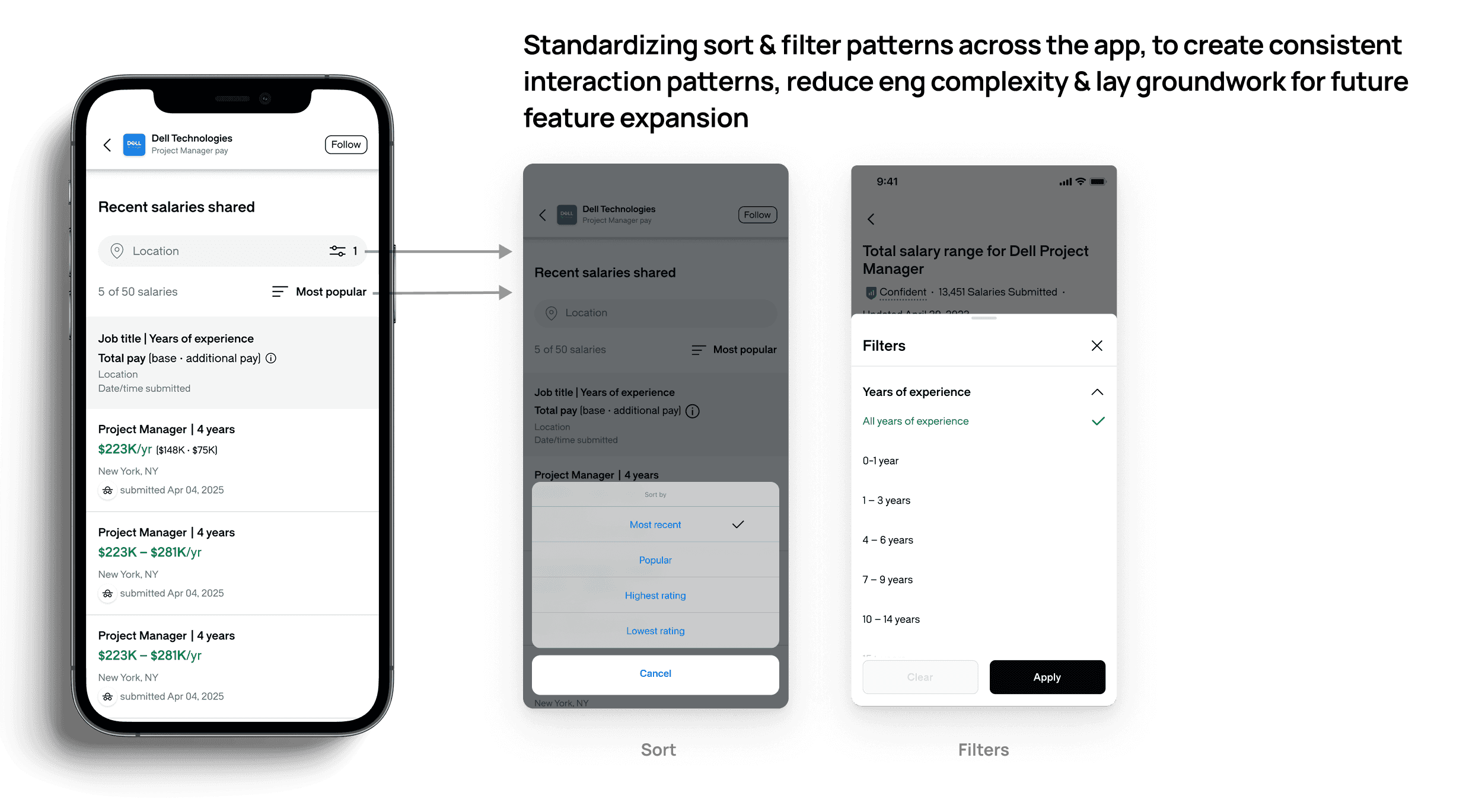
This was a scalable design system pattern that could be applied platform-wide across all employer content pages

This was a scalable design system pattern that could be applied platform-wide across all employer content pages

This was a scalable design system pattern that could be applied platform-wide across all employer content pages

It reduced future design debt & ensured consistent implementation across eng teams

It reduced future design debt & ensured consistent implementation across eng teams

SYSTEMS THINKING &

CONTENT ARCHITECTURE

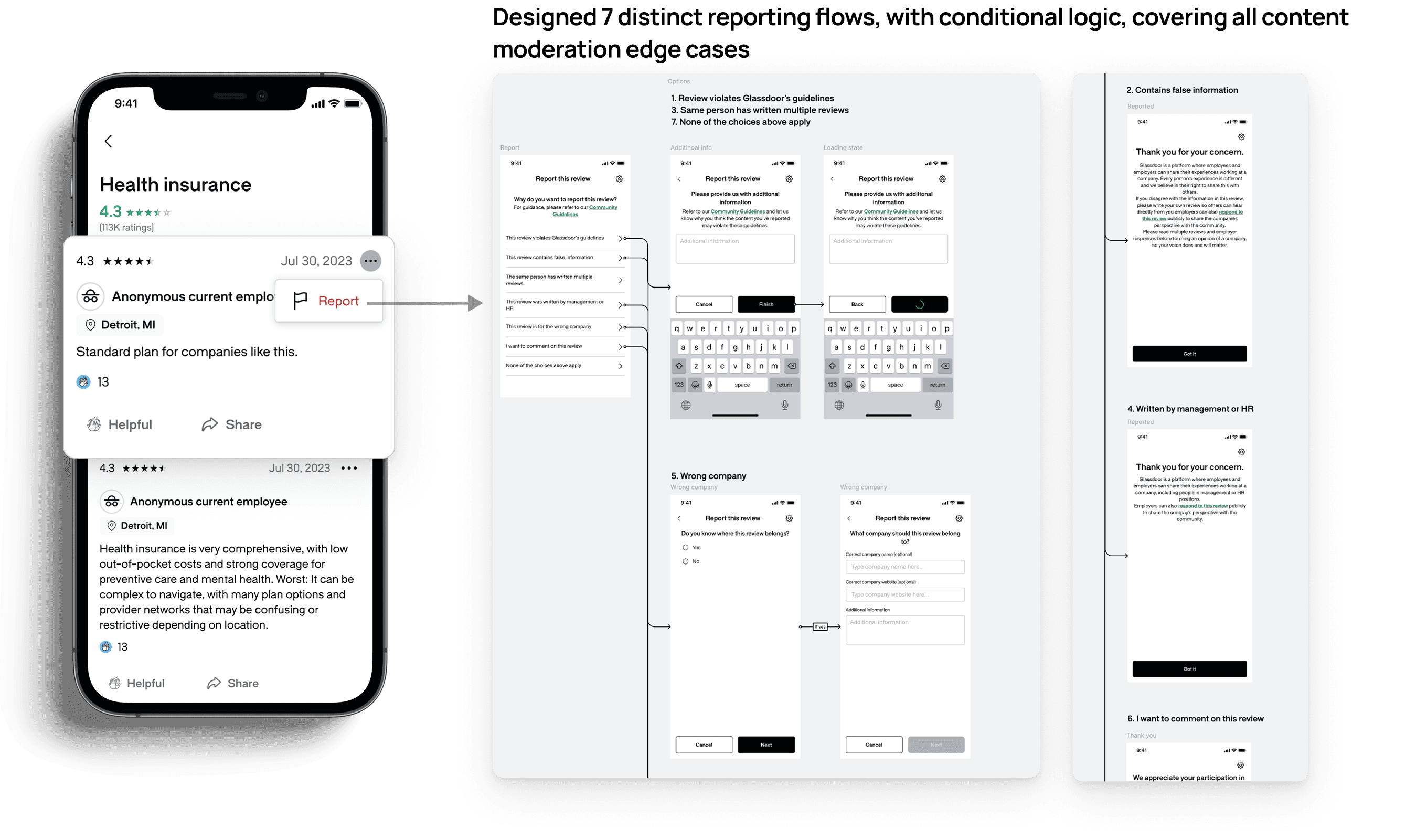
How do we build for scalability and consistency across design system?
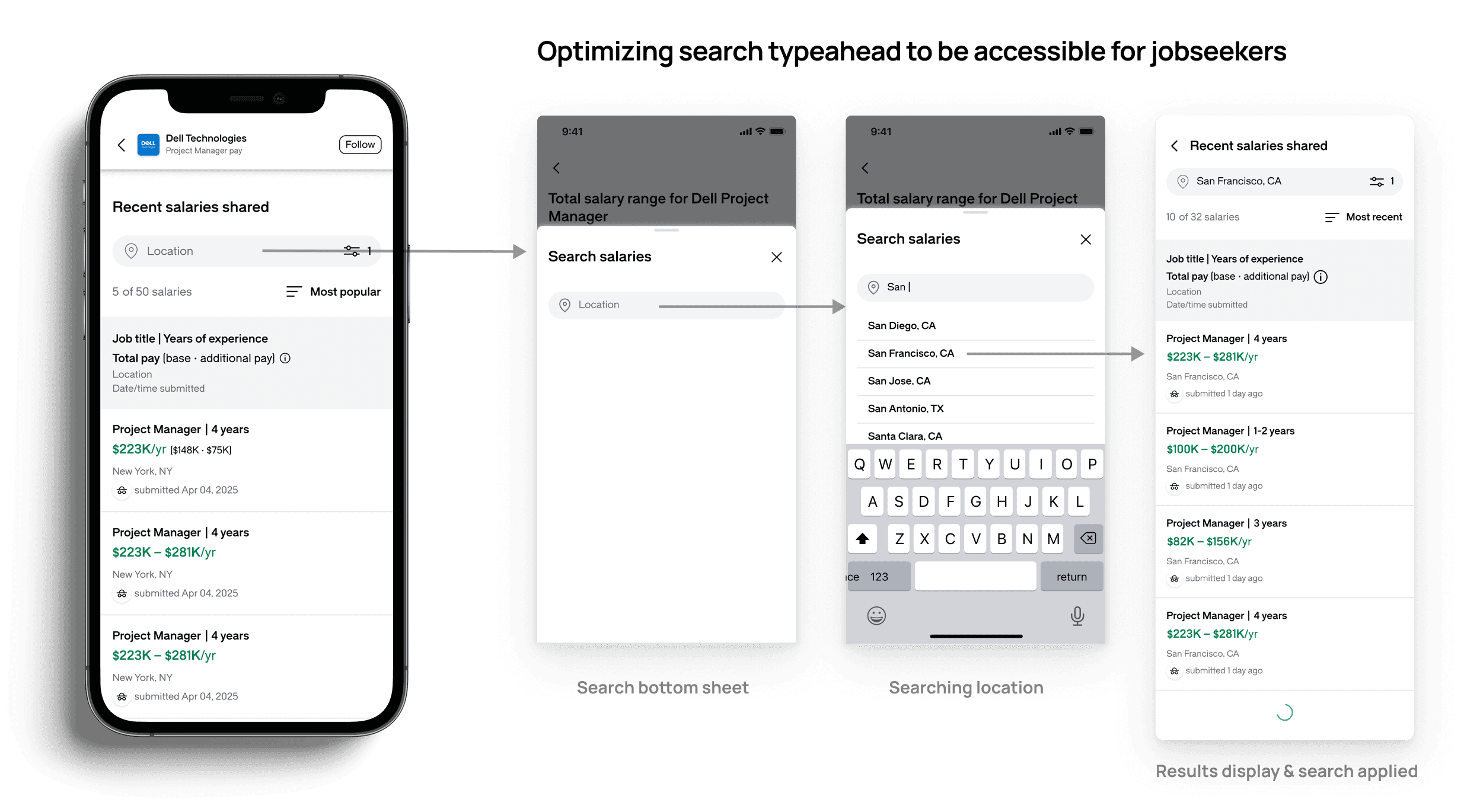
The image featured at the bottom of the about us page

RESULTS

Launched successfully in Q3 FY25

RESULTS

Shipped to 3M monthly users, with measurable impact across data quality, engagement, and jobs conversion

Shipped to 3M monthly users, with measurable impact across data quality, engagement, and jobs conversion

This was a large redesign effort across design and engineering. Design decisions enabled full migration off of legacy web frames, which eliminating a longstanding infrastructure constraint for engineering.

  • +8% Job alerts created

  • +8% Job alerts created

  • +75% Salary quality % right feedback (16% —> 28%)

  • +75% Salary quality % right feedback (16% —> 28%)

  • +10pt Improvement in SUS scores for salary pages

  • +10pt Improvement in SUS scores for salary users

  • +37% Benefit review contributions

  • +37% Benefit review contributions

Big wins as the first native salaries & benefits experience

Big wins as the first native salaries & benefits experience